
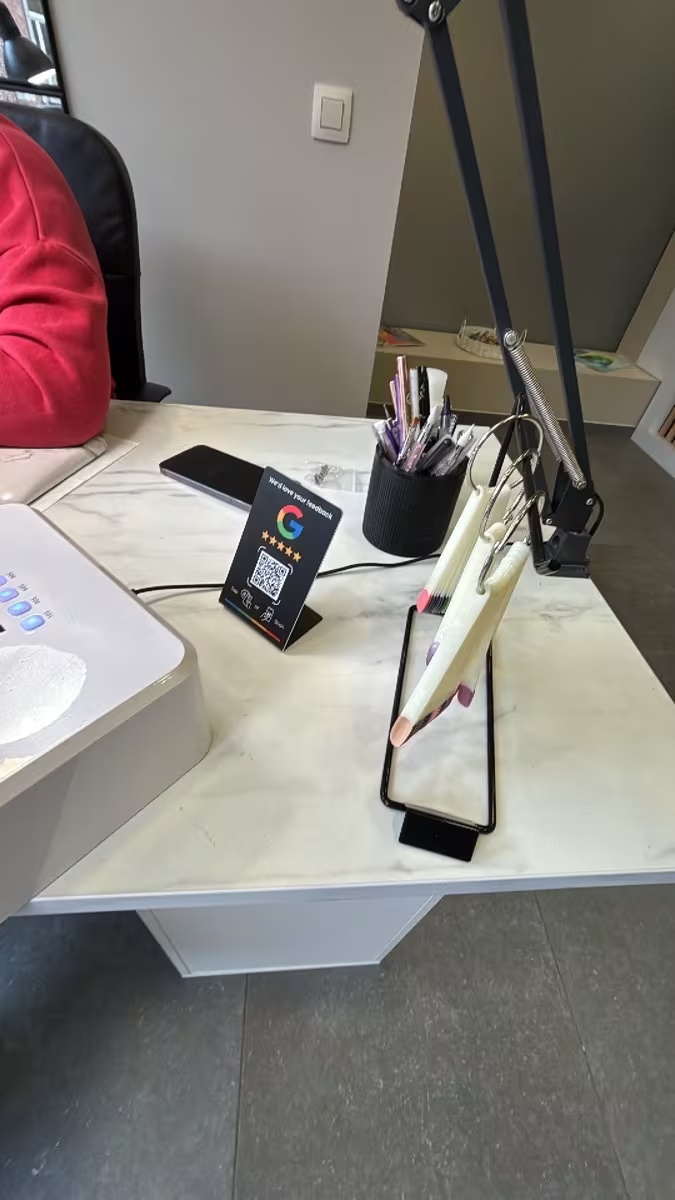
A Google review strategy should make it easy for genuine customers to describe genuine experiences. That sounds obvious, but many businesses either never ask or use tactics that create pressure and policy risk. A better system is simple enough for staff to repeat and fair enough for every customer to trust.
Start with a profile worth finding
Before asking for reviews, confirm that the Google Business Profile represents the correct business and location. Check the trading name, primary category, address or service area, opening hours, telephone number, website, photographs and direct review link.
A broken or duplicate profile creates friction after the customer has already agreed to help. Test the direct link on a phone that is not signed into the business account. The customer should land on the intended profile and be able to begin an honest review.
Choose one natural customer moment
The right moment is usually just after value has been delivered: when a meal is finished, a guest checks out, a repair is handed back, a client sees the completed work, or a customer completes payment.
Choose a repeatable point in the workflow rather than leaving the request to memory. A café might place a review stand beside the card machine. A contractor might carry an NFC card and present it during handover. A guesthouse might place a plaque at reception.
Do not interrupt an unresolved complaint or pressure someone who is visibly rushed. Good timing respects the customer while keeping the invitation open to everyone.
Use one short, neutral sentence
A useful request does not prescribe the rating or the words. Staff can say:
“If you have a moment, you can tap here to share your honest experience with us on Google.”
This sentence is clear, voluntary and neutral. Avoid “Please give us five stars,” “Only review us if you are happy,” or staff targets that encourage selective asking.
Training should focus on recognising the chosen moment and making the process easy, not on convincing the customer to praise the business.
Remove the search and typing
Even satisfied customers forget by the time they get home. An NFC card or QR code closes the gap between intention and action by opening the direct review route while the experience is fresh.
The physical product should be visible, within reach and accompanied by a simple cue such as “Tap to review.” Test both NFC and QR routes separately. If you need the technical detail, read how NFC review cards work.
Avoid incentives and review gating
Google’s published policy prohibits merchants from discouraging negative reviews or selectively soliciting positive reviews. A flow that sends four- and five-star customers to Google while stopping lower ratings on a private thank-you page is review gating.
Offering discounts, gifts, entries or free items in exchange for a review can also undermine trust and violate platform rules. The safe approach is to invite genuine feedback without controlling the outcome.
Private feedback is still valuable. Offer it as an equal choice for every customer, not as a route that appears only after a low score. That principle is built into the planned Smart Feedback concept.
Respond to reviews like a real business
A thoughtful response shows future customers that the business listens. Thank positive reviewers without using the same copied sentence every time. For critical feedback, acknowledge the experience, avoid sharing private details, explain any immediate action and invite direct contact where a longer conversation is appropriate.
Do not argue, threaten or offer a benefit for changing or removing a review. If a review genuinely violates Google’s content policy, use the official reporting process rather than treating every negative opinion as invalid.
Measure the process, not just the rating
Track whether staff remember the request, whether the NFC and QR links work, where the product is positioned and how review volume changes over several weeks. A small business does not need invasive customer tracking to learn whether the system is working.
Review count and average rating are lagging outcomes. The controllable inputs are profile accuracy, service quality, timing, visibility and a consistent neutral ask.
- Check the review link monthly.
- Review recurring service themes with the team.
- Move the product if customers overlook it.
- Refresh staff wording without scripting praise.
- Keep public review and private feedback choices equally available.
Make the honest ask easier